What Stage of Dementia Are We In?
October 2026 Workshop - Replay & Cheatsheets
The recording below will be blank until 24-48 hours after the live workshop has concluded.
In the meantime, you can still download the cheatsheet at the bottom of the page, and here’s the zoom info for the upcoming event!
Topic: What Stage of Dementia Are We In?
Time: Oct 22, 2026 07:30 PM Eastern Time (US and Canada)
Zoom Meeting Link: https://us06web.zoom.us/j/82627177608?pwd=LrH8a6wA7Ha8KVHWssruAjqRQlXDKC.1
Dial in number (if needed): +17193594580
Meeting ID: Meeting ID: 826 2717 7608
Passcode: 669237
Downloads/Printables
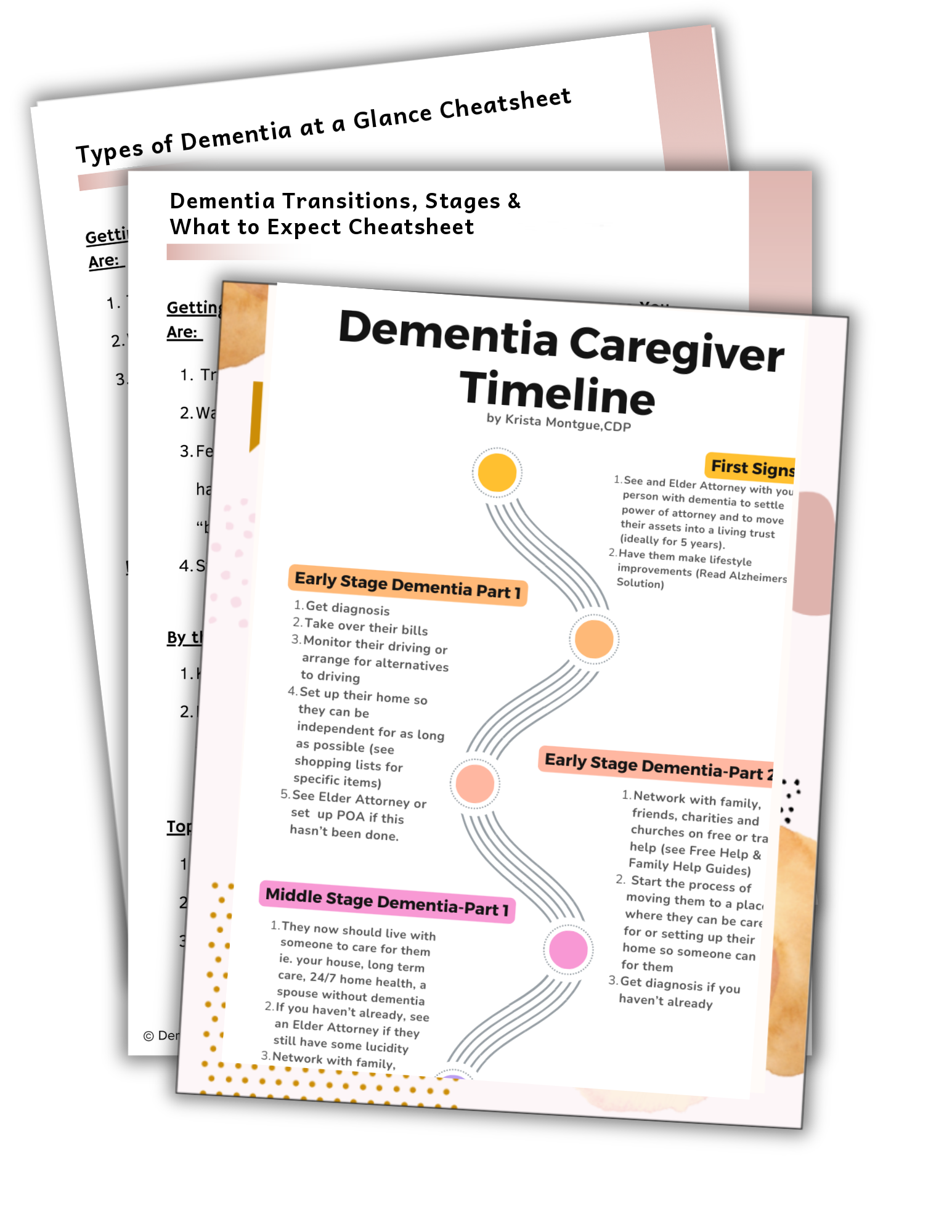
Dementia Transitions, Stages & What to Expect Cheatsheet
Pinpoint whether your person is in the early, middle or late stage using the one clear sign that marks each transition, so you can stop guessing where they are and start planning for what’s next.
Know who to call when late stage needs show up, from a speech therapist for swallowing trouble to hospice when they’re refusing food and sleeping most of the day, so you get the right help the first time.
Keep communicating once language is mostly gone by showing with your body and everyday objects, so you can still reach them in the late stage.
Dementia Caregiver Timeline
See what to put in place at each stage, from legal and financial paperwork while your person can still sign it to home safety changes as wandering or falls start to show up, so you’re not scrambling to catch up after something goes wrong.
Know roughly how long each stage tends to last and the signs that mean it’s time to add help, like respite care, in-home care or a move to memory care, so you can plan ahead instead of letting a crisis decide for you.
Mark when to line up support for yourself along the way, from a caregiver support group to regular breaks, so you can keep going for the long haul without burning out.
Types of Dementia at a Glance Cheatsheet
Compare Alzheimer’s, vascular, Lewy body and frontotemporal dementia side by side, from the first signs to how each one tends to progress, so you can finally make sense of the diagnosis your person was given.
Know which symptoms are typical for your person’s type, like hallucinations with Lewy body or personality changes with frontotemporal, so a new behavior doesn’t blindside you or send you searching online at midnight.
Bring the right questions to their next doctor’s appointment, so you leave with a clearer picture of what to expect instead of more confusion.