End Stage Dementia & Hospice Workshop
September 2026 Workshop - Replay & Cheatsheets
The recording below will be blank until 24-48 hours after the live workshop has concluded.
In the meantime, you can still download the cheatsheet at the bottom of the page, and here’s the zoom info for the upcoming event!
Topic: End Stage Dementia & Hospice Workshop
Time: Sep 17, 2026 07:30 PM Eastern Time (US and Canada)
Zoom Meeting Link: https://us06web.zoom.us/j/86111828737?pwd=XKHezIhg7jthUApMa3SfUoB2PbFNoy.1
Dial in number (if needed): +17207072699
Meeting ID: 861 1182 8737
Passcode: 409192
Downloads/Printables
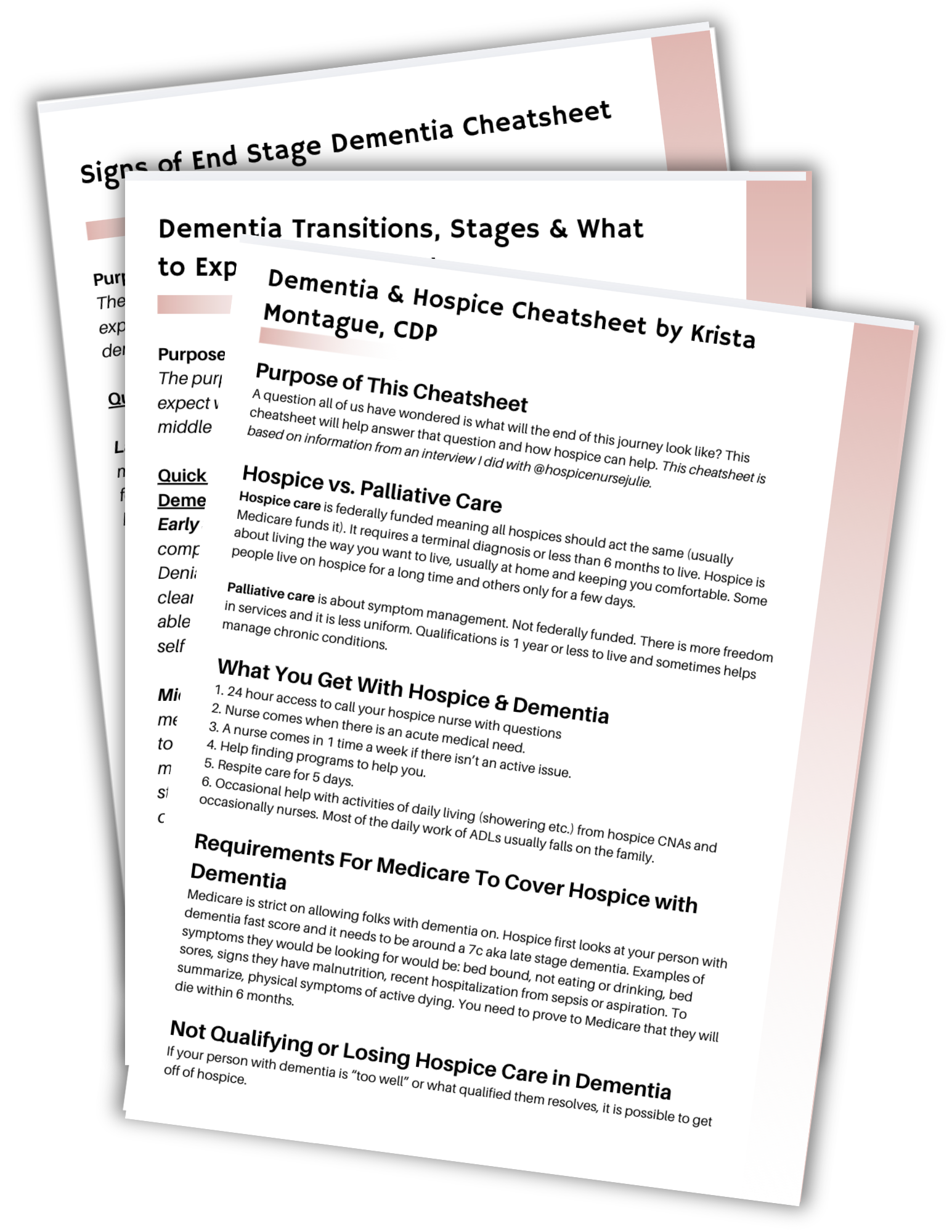
Dementia & Hospice Cheatsheet
See the difference between hospice and palliative care at a glance, including who qualifies for each and who pays for it, so you know exactly which one to ask for and when.
Know what Medicare looks for before it approves hospice for someone with dementia, from being bed bound to a recent hospital stay, so you can recognize when your person is likely to qualify and ask for an evaluation before a crisis forces the question.
Recognize the signs of active dying and that the end is close, from changes in breathing to sleeping without waking, so you're not left wondering what you're seeing and can focus on keeping them comfortable.
Dementia Transitions, Stages & What to Expect Cheatsheet
Pinpoint whether your person is in the early, middle or late stage using the one clear sign that marks each transition, so you can stop guessing where they are and start planning for what's next.
Know who to call when late stage needs show up, from a speech therapist for swallowing trouble to hospice when they're refusing food and sleeping most of the day, so you get the right help the first time.
Keep communicating once language is mostly gone by showing with your body and everyday objects, so you can still reach them in the late stage.
Signs of End Stage Dementia Cheatsheet
Know the signs that your person has moved into the end stage, from sleeping most of the day to trouble swallowing to turning away food and drink, so you can stop wondering if this is it and start preparing.
Recognize the signs of active dying, including the rally that looks like they are getting better, the changes in breathing and the long pauses and sudden gasps, so nothing you see in those last days catches you off guard.
Know what to do as each sign shows up, from calling hospice to keeping them clean, safe and comfortable, so you can spend their last days being with them instead of scrambling.